 Italiano
  English (UK)
MARIO SCHIFANO
A Visionary of Italian Pop Art and Neo-Avant-Garde — Between Image, Memory, and Media
Mario Schifano was born in 1934 in Homs, Libya, then an Italian colony. His father, an archaeologist and restorer involved in the excavation of Leptis Magna, introduced him early on to the tactile intimacy of ancient objects and the precision of visual documentation. After relocating to Rome in the aftermath of World War II, Schifano, restless and disinterested in formal education, entered the Museo Etrusco di Villa Giulia where he worked restoring vases and drawing tomb plans. These early exercises in line and form laid an unlikely yet indelible foundation for his future as one of the most iconoclastic figures in post-war Italian art.
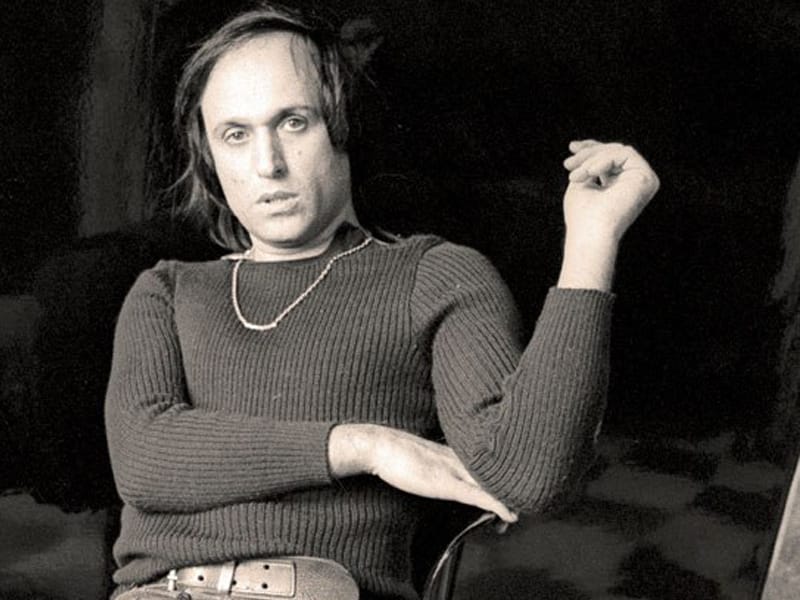
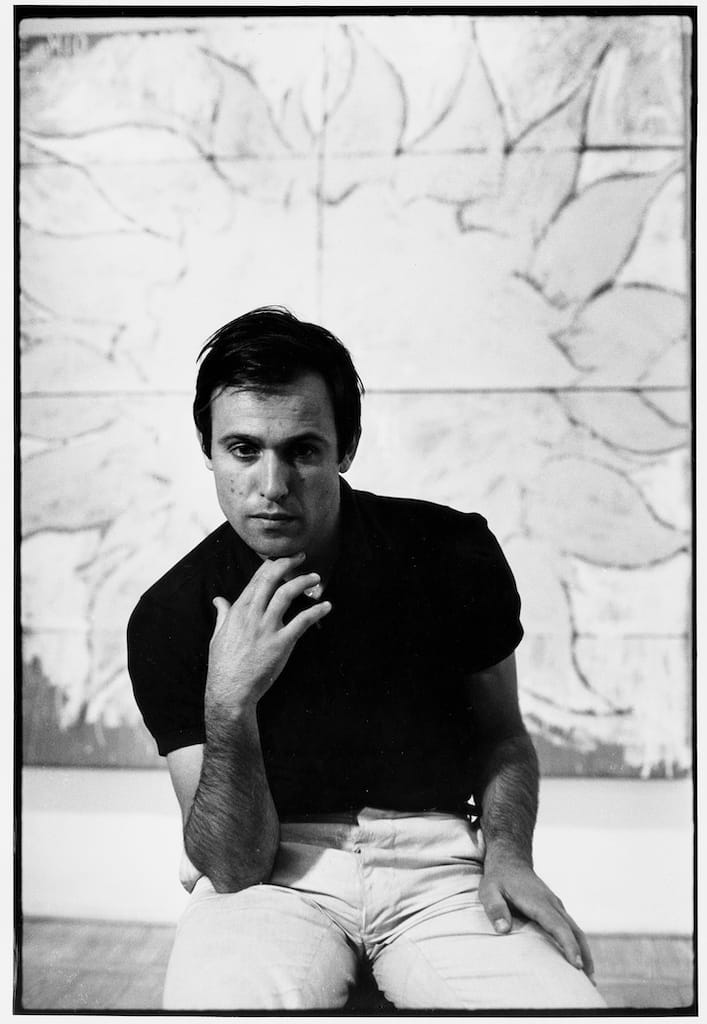
Schifano’s formal debut came in 1959 with a solo exhibition at Galleria Appia Antica in Rome. The works, steeped in the gestural language of Art Informel, already revealed a tactile sensibility and emotional rawness. But it was the landmark 1960 group show Cinque pittori romani at Galleria La Salita, with Angeli, Festa, Lo Savio, and Uncini, that marked his catalytic emergence. Soon after, Schifano would be a recurring name in Italy’s most prestigious exhibitions, winning the Premio Lissone (1961) and the Premio Fiorino (1963), while rapidly evolving toward a personal iconography and visual language.
The 1960s: Anemic Landscapes and Electric Icons: The Alchemy of Image
In the early 1960s, Schifano’s work turned to monochromes: painterly fields of single color often laid over paper glued to canvas, functioning less as images than as screens or surfaces for visual interruption. These works opened space for the industrial, the artificial, and the symbolic: fragments of advertising, letters, and logos emerged as signs of a new visual grammar, one shaped by mass culture.
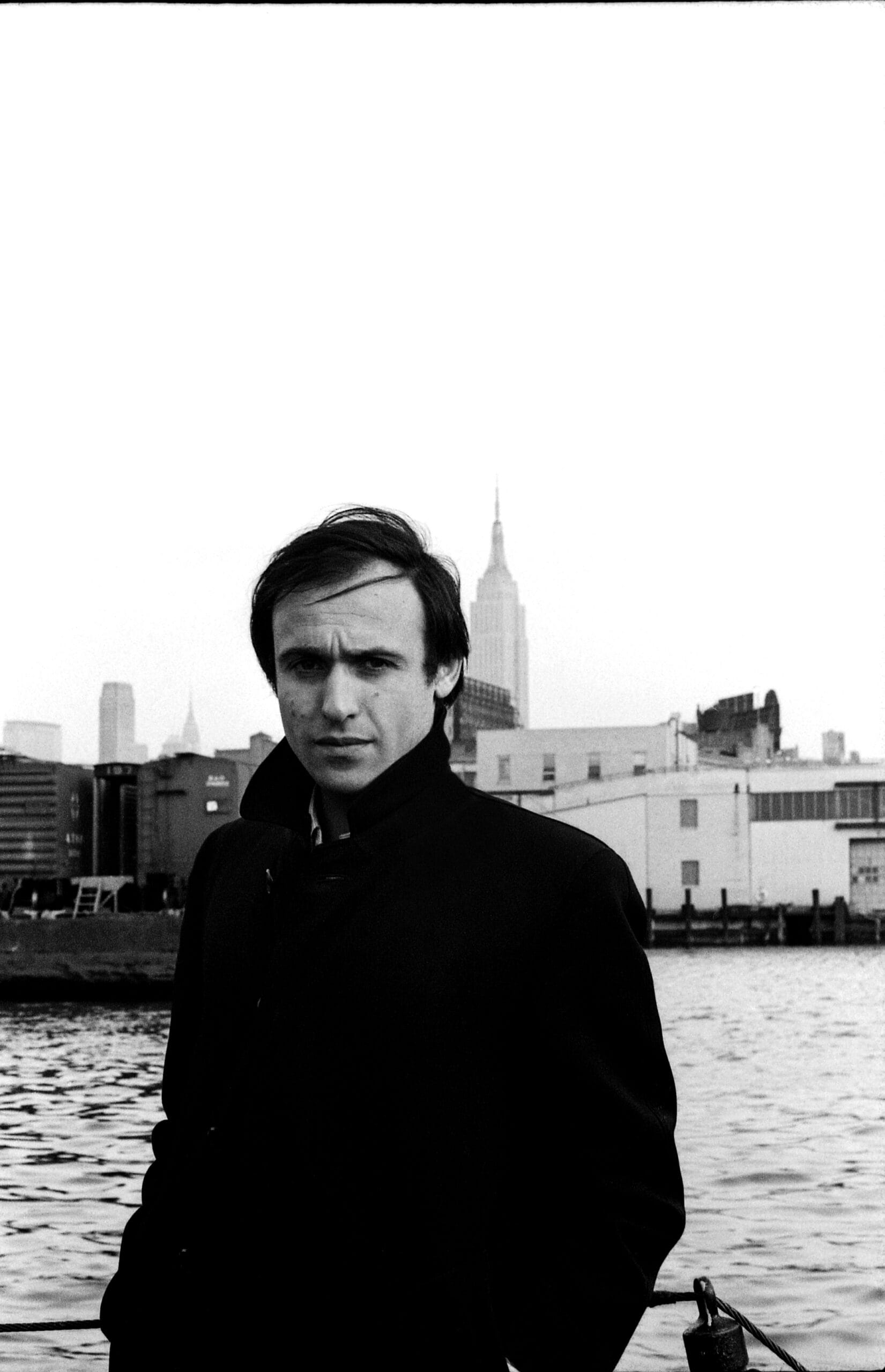
During a formative stay in New York (1962–1964), Schifano immersed himself in the epicenter of the international avant-garde. His journey to the city was not a solitary one. In 1961, he met Anita Pallenberg at the famed Caffè Rosati in Rome. The following year, they traveled together to New York, where Schifano was quickly absorbed into the orbit of Andy Warhol and Gerard Malanga, frequenting the Factory and the underground soirées of the New American Cinema Group.
IF I WEREN’T ANDY WARHOL I WOULD BE MARIO SCHIFANO
– Andy Warhol
This was the period of The New Realists, the landmark 1962 exhibition at the Sidney Janis Gallery in which Schifano exhibited alongside the titans of Pop Art and Nouveau Réalisme, including Warhol, Roy Lichtenstein, and Claes Oldenburg. More than a moment of international recognition, the show positioned Schifano as a key interlocutor between European and American visual cultures.
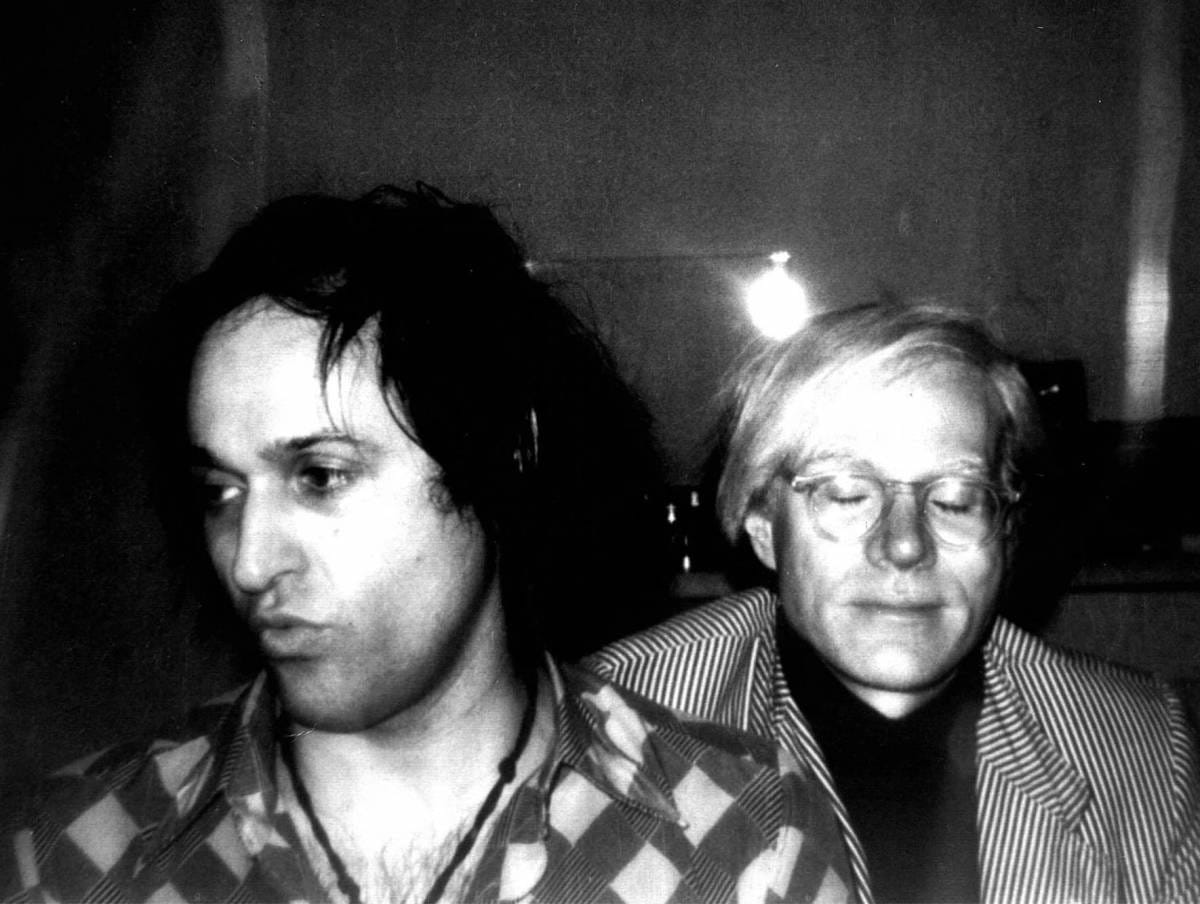
Beyond the gallery walls, Schifano was equally present in the New York social and subcultural scenes. His exposure to the experimental ethos of the time, including early encounters with LSD, profoundly affected his sensorial and philosophical engagement with image-making. Perhaps most crucially, it was here that he developed a lifelong friendship with Ettore Rosboch, a fellow Italian with whom he shared an intense passion for music. Their mutual explorations, including frequent travels to London, led to friendships with the Rolling Stones, a circle that expanded when they introduced Anita Pallenberg to Brian Jones in 1965. She would later become the partner of Keith Richards, further entwining Schifano’s life with the mythos of rock and counterculture.
The Paesaggi Anemici (“Anemic Landscapes”) series, conceived in this period, perfectly illustrates Schifano’s approach. These are not landscapes experienced, but landscapes recalled—filtered through media, evoked by signs, fragments, and residual impressions. They are meditations on absence and presence, truth and reproduction.
“The sixties are me.”
His experimentation extended beyond canvas: Schifano was deeply immersed in cinema, television, photography, and music. In the 1960s, he produced films such as Satellite, Umano non umano, and Trapianto, consunzione e morte di Franco Brocani, iconoclastic reflections on culture and reality.
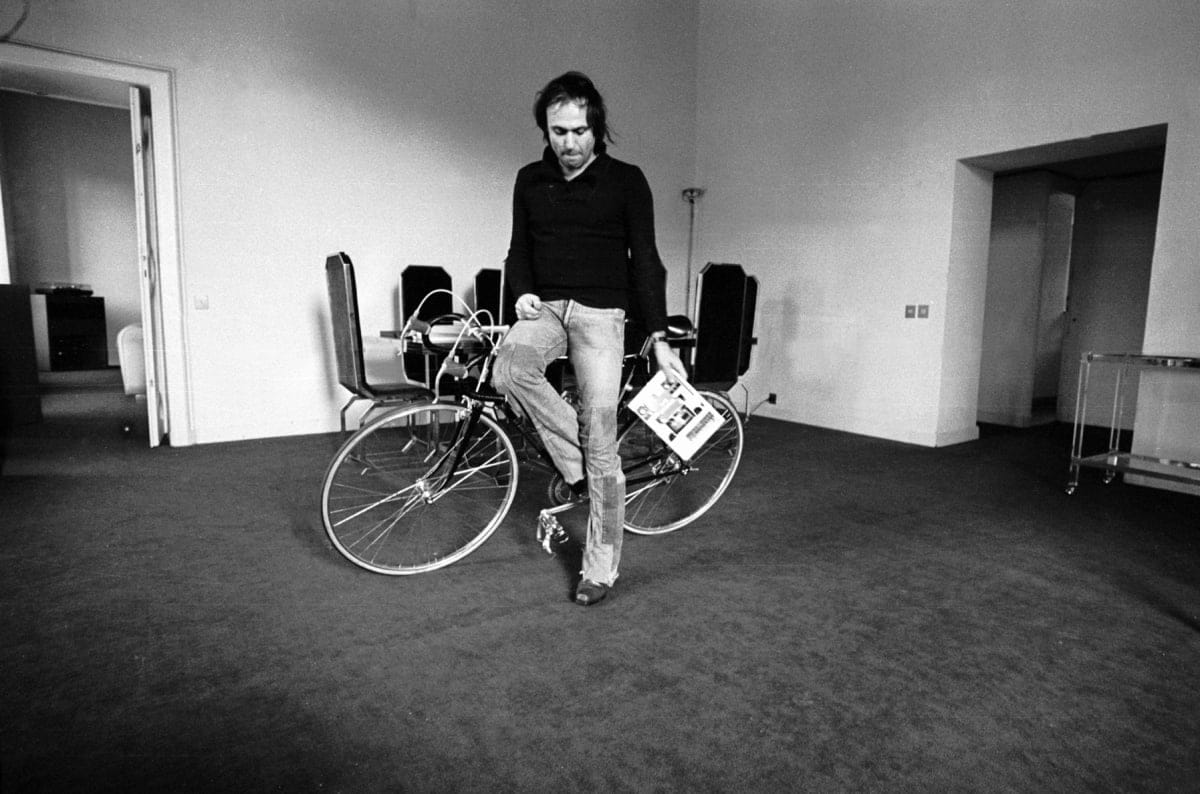
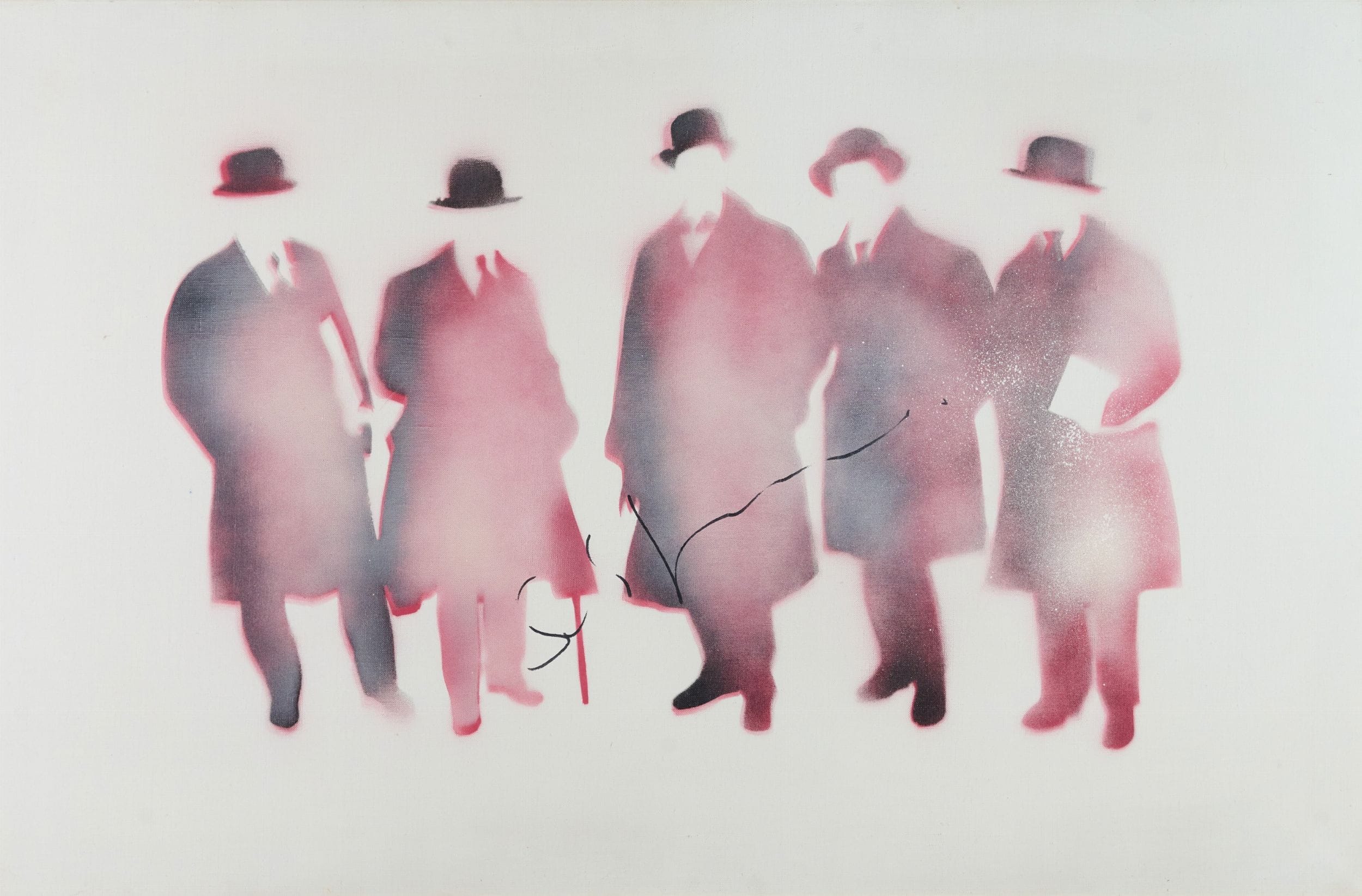
In the mid-1960s, Mario Schifano embarked on a series titled Futurismo rivisitato, where he revisited the Futurist movement by appropriating and reinterpreting iconic images associated with its key figures. One of the central works in this series is Futurismo rivisitato (1966), where Schifano utilized a stencil technique to recreate a famous 1912 photograph of five leading Futurists, Marinetti, Boccioni, Carrà, Severini, and Russolo, taken in Paris. By applying spray paint over the stencil, Schifano not only reproduced the image but also infused it with a contemporary aesthetic, reflecting his interest in the intersection of past and present artistic expressions.
The 1970s: The Televised Image and the Emulsified Canvas
The 1970s were a time of technological assimilation and conceptual reinvention for Schifano. Increasingly disengaged from traditional painting, he began capturing and manipulating television imagery, isolated frames from broadcasts, transferred to canvas through photographic emulsion, and then altered with vibrant applications of industrial paint. These works are often referred to as television landscapes or emulsified canvases (televisioni), and they marked one of the earliest integrations of video and broadcast media into painterly practice in Europe.
He was not interested in television as a medium, yet rather in what television did to images.
Schifano sourced images both from the screen and his own camera, often drawing from newsreels, advertising, and documentaries. In doing so, he detached images from narrative, transforming them into icons of the moment: ephemeral, fragmented, yet deeply symbolic. His use of synthetic colors, transparencies, and layering heightened this alienation, making the viewer acutely aware of the mediation of reality.
He also directed and appeared in a number of film experiments, including Satellite, Umano non umano, and Trapianto, consunzione e morte di Franco Brocani—works that parallel his canvas practice in their deconstruction of linear time and stable identity.
Yet this was also a time of personal turmoil. The artist, increasingly troubled by addiction and periods of self-imposed isolation, often saw his artistic output interrupted by moments of withdrawal. Still, even in these darker intervals, his fascination with the aesthetic of media, speed, and repetition never waned.
The 1980s: History, Nature, and Re-Invention
In the 1980s, Schifano’s practice became more retrospective and historical, yet never nostalgic. He returned repeatedly to images of images, iconic artworks, figures, and motifs lifted from the canon of art history or from his own past. Artists like Boccioni, de Chirico, and Cézanne were not quoted but sampled, filtered through Schifano’s chromatic syntax and recomposed as cultural palimpsests.
This period also saw the emergence of works inspired by natural imagery: waves, dunes, palm trees, and fields of wheat. These were not painted from life, but from mediated sources (films, photos, television stills) yet Schifano endowed them with a lyrical, almost metaphysical quality. His Paesaggi (Landscapes) from this time recall earlier Paesaggi Anemici, yet are more painterly and sensual, drenched in light and saturated color.
At the same time, Schifano began using non-traditional supports and materials: plexiglass, enamel, acrylics, and photographic emulsions. This fusion of tactile painterliness with the flatness of the screen created a signature tension between surface and image, memory and presence.
The 1990s: Echoes of the Screen
In the 1990s, Mario Schifano entered a late yet fertile phase marked by technological experimentation, media critique, and renewed painterly vigor. He embraced digital processes, incorporating satellite imagery and televised content into monumental works like those in Divulgare (1990), reflecting on war, environmental crisis, and mass media’s saturation of daily life.
International recognition followed, with key exhibitions at the Guggenheim (The Italian Metamorphosis, 1994) and a traveling Latin American retrospective celebrating his reinterpretations of TV imagery. In 1997, he received the San Giorgio di Donatello Prize for stained glass works in Santa Croce, Florence—a poetic coda to a career rooted in both the sacred and the synthetic.
Schifano’s 1990s were a final flourish of visionary hybridity, where painting, technology, and culture collapsed into a single, glowing screen.
Public Recognition and the Shadow of Excess
Despite his chaotic personal life, Schifano continued to receive significant institutional recognition. He exhibited multiple times at the Venice Biennale (1978, 1982, 1984) and was featured in major shows across Europe and Latin America. A 1996–1998 Latin American tour celebrated his television works in Brazil, Buenos Aires, Havana, and Mexico City, recognizing him as a precursor of image-based contemporary art.
In 1997, he received the prestigious Premio San Giorgio di Donatello for his stained-glass windows in the crypt of Santa Croce in Florence. The following year, he passed away in Rome at the age of 63. The 1999 Venice Biennale honored his legacy with a commemorative exhibition, cementing his place among Italy’s most radical and resonant voices of the 20th century.
Achille Bonito Oliva once wrote, “Schifano è un inviato speciale nella pittura come uomo e un inviato speciale nella realtà come pittore.”
“Schifano is a special envoy in painting as a man and a special envoy in reality as a painter.”
Indeed, Schifano remains a singular figure: poet of the screen, iconographer of memory, and a tireless transformer of contemporary vision.
“Perhaps childhood never ended for me, not even now that I am quite advanced in years. I don’t want to appear presumptuous, but by childhood I mean the possibility of continuing to observe the world with a … magical gaze.“


Disclaimer
Some of the images featured on this page are sourced from publicly available materials on the internet and are used for educational and cultural commentary purposes only. All rights to these images remain with their respective copyright holders. If you are the rightful owner of any of the images and believe their use here infringes on your rights, please contact us, and the content will be promptly removed or credited accordingly.